
The Alabama Hills: A Visitor's Guide
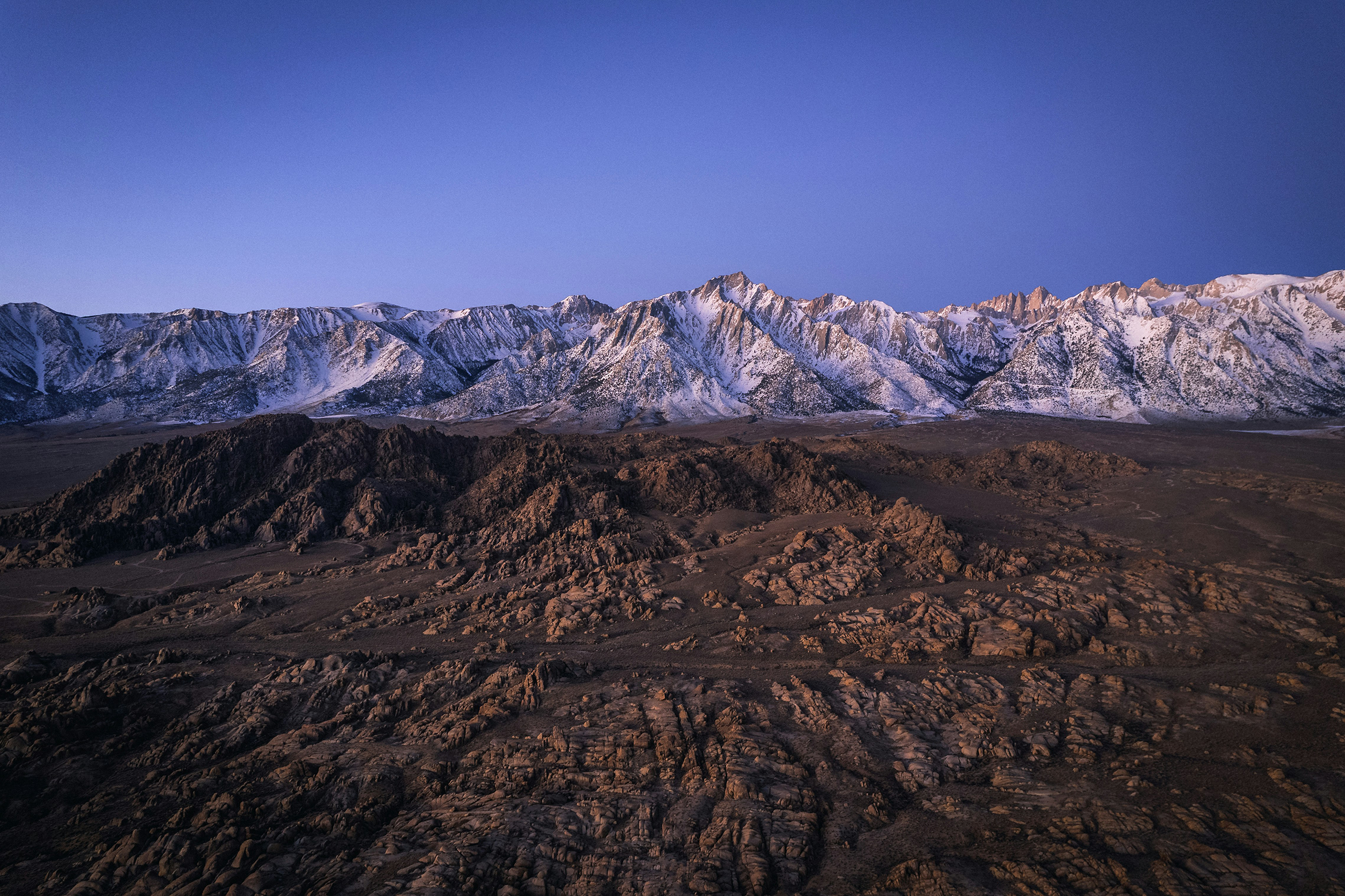
The Alabama Hills are a maze of rounded granite boulders and natural arches at the foot of the Sierra Nevada, just west of Lone Pine. More than 400 films have been shot here. For a first visit, drive Movie Road, walk the short Mobius Arch Loop, and come at sunrise if you can.
If sunrise at the arch is the whole reason for your trip, sleep in Lone Pine. If the Alabama Hills are one day of a longer Eastern Sierra trip, Big Pine makes a good base. It sits 15 miles south of Bishop on Highway 395, about a 15- to 20-minute drive, and from there Movie Road is roughly an hour to an hour and a quarter south, with Manzanar on the way.
What Are the Alabama Hills?
The Alabama Hills National Scenic Area covers 18,610 acres of public land between the town of Lone Pine and the eastern wall of the Sierra Nevada. Congress gave it that status in March 2019, and the Bureau of Land Management looks after it.
The hills are low, weathered and round. Behind them the Sierra rises sharp and jagged, with Mount Whitney among the peaks. That contrast is the whole look of the place, and it is why film crews have been coming since 1920.
The name goes back to the Civil War. In 1863, prospectors who sided with the Confederacy named their mining claims after the CSS Alabama, a Confederate warship, and the name spread to the whole range. The Paiute name for the wider Owens Valley is Payahuunadü, "the land of flowing water." The Lone Pine Paiute-Shoshone Reservation sits next to the hills today.
How Do You Get to the Alabama Hills From Big Pine?
Drive south on Highway 395 for about 42 miles, through Independence and past Manzanar, to Lone Pine. At the stoplight in the center of town, turn west onto Whitney Portal Road. After about 2.5 miles, turn right onto Movie Road. From Palisades Lodge to the Mobius Arch parking area is about 47 miles, roughly an hour to an hour and a quarter, depending on how slowly you take the dirt.
Movie Road is graded dirt. In dry weather, a regular passenger car usually handles it fine at low speed. Heavy rain can change that, so check current conditions if a storm has just come through. The side roads branching off Movie Road are rougher, and some need higher clearance.
Whitney Portal Road reopened in January 2025 after storm damage from Hurricane Hilary. Inyo County posts current road status if you want to check before you leave.
Movie Road has no food, fuel, or shops. Fill the tank and the water bottles before you turn off Highway 395. Hi-Country Market, across the street from the lodge, has gas, ice, and deli sandwiches for the drive.
What Should You See on Movie Road?
You could spend days out here hunting for named arches. Most visitors have a morning or an afternoon, so these are the stops we would put first.
Mobius Arch Loop
The Mobius Arch Loop is the classic first stop. Follow Movie Road about 1.5 miles to a fork, bear right, and the dirt parking area is on the left. The loop is a little over half a mile with barely any climbing and takes about 30 minutes, longer with photos.
The view through the arch is the reason to come. Stand on the east side and look west. Lone Pine Peak sits closer and often looks like the dominant peak from here. Mount Whitney is farther back, the serrated summit at the head of the canyon.
Depending on where you stand, either peak can end up framed in the arch. Take a few steps in each direction before you settle on a photo.
At sunrise, expect company. It is one of the most photographed stops in the hills.
The Wide View Farther Up Movie Road
Past the Mobius lot, Movie Road keeps going toward the mountains. The higher ground along it gives you the wide view: the whole spill of boulders below and the Sierra crest above. The Jericho missile scene in Iron Man was shot on a ridge overlooking the hills. The exact spot is not signed.
Lathe Arch
If you want one more arch, Lathe Arch makes a good second stop. Most of the arches and film sites out here have no signs, so pick up a map at the film museum or the visitor center before you drive in.
If You Only Have Two Hours
Walk the Mobius Arch Loop, then drive a little farther up Movie Road for the wide view.
Which Movies Were Filmed in the Alabama Hills?
More than 400 films have been made here since 1920, many of them westerns. A few worth knowing before you go:
Gunga Din (1939) turned the hills into northern India. After filming, the village set was taken apart and used to build a western town at nearby Anchor Ranch, which stood until the 1950s.
Tremors (1990) was shot here. One of its underground monsters, a Graboid, is now on display in Lone Pine.
Iron Man (2008) used the hills for the Jericho missile demonstration.
Django Unchained (2012) kept Quentin Tarantino's crew here for about three months. Much of the filming happened at night, with rock climbers positioning the lights on the boulders.
The Museum of Western Film History at 701 South Main Street in Lone Pine is open daily from 9 to 5, and admission is an $8 donation. Inside are the Tremors Graboid and the dentist's wagon from Django Unchained. We suggest starting there. The museum has a self-guided tour map of Movie Road, and without it, most of the film locations are hard to spot.
Every October, the Lone Pine Film Festival runs screenings, talks, and guided tours of the filming locations. In 2026, it runs October 8 to 11.
When Is the Best Time to Visit the Alabama Hills?
Sunrise, if you can manage it. Just before the sun comes up, the Sierra crest turns pink with alpenglow while the hills are still in shadow. From Big Pine, that means leaving well over an hour before sunrise.
Sunset is trickier. The sun drops behind the Sierra, so on a clear evening you are looking at the shaded side of the mountains against the brightest part of the sky. Clouds can help. On a clear day, we would pick sunrise.
Full moon nights are the other option. The moon rises in the east around sunset and lights up the hills and the crest as soon as it is dark. Our Eastern Sierra stargazing guide covers where else to look up.
As for the season, spring and fall are the most comfortable. Lone Pine averages highs around 72°F in April and 76°F in October. July averages 95°F, and there is almost no shade among the rocks, so we would plan summer visits for early morning. January highs sit in the low 50s with nights near freezing. The Bureau of Land Management describes mid-September through November as the busy season, with weekends the most crowded.
What Should You Know Before You Go?
Bring more water than you think you need, plus a hat and sunscreen. Shade is rare among the rocks.
Portable toilets are at the Mobius Arch parking area and across from Shark Fin. No other facilities are available on Movie Road.
Download your map before you leave town. Cell coverage out here depends on your carrier and how far you are into the rocks.
Drive and ride only on existing roads, and walk on existing trails. The desert soil and plants between the rocks are easy to damage and slow to recover.
Leave the rocks as you found them. Do not stack them, carve them, or paint them, and pack out everything you bring in.
Rock climbing is a permitted activity in the Alabama Hills. Flying a drone is different: every drone operator needs a permit from the Bureau of Land Management before flying.
Camping outside the developed campgrounds is allowed only in designated sites and requires a free Alabama Hills camping permit. The permit does not reserve a site. All sites are first come, first served.
For current conditions, maps, and permits, stop at the Eastern Sierra Interagency Visitor Center at the junction of Highway 395 and Highway 136, just south of Lone Pine.
Rules and permit requirements checked against the Bureau of Land Management's Alabama Hills page in September 2026.
Are the Alabama Hills Worth the Drive From Big Pine?
For most people, we think so. If you like photography, film history, or an easy half day of walking among strange rocks, the drive south is worth it. It is even better paired with Manzanar, which sits right on the way.
It is less worth it as a quick in-and-out on a July afternoon. That is two hours or more of round-trip driving for a hot walk with no shade.
A full day from Big Pine might look like this:
Morning: drive about 40 minutes south to Manzanar National Historic Site and give it one and a half to two hours
Late morning: continue to Lone Pine, visit the film museum, and pick up the Movie Road map
Afternoon: drive Movie Road and walk the Mobius Arch Loop
Evening: back in Big Pine for dinner
For sunrise, flip it. Start at Mobius Arch, then work north through Lone Pine and Manzanar on the way home. Our Highway 395 road trip guide shows how the day fits into the rest of the drive.
Where Should You Stay to Visit the Alabama Hills?
The closest bed is not always the best base. It depends on whether the Alabama Hills are the trip or one stop on it.
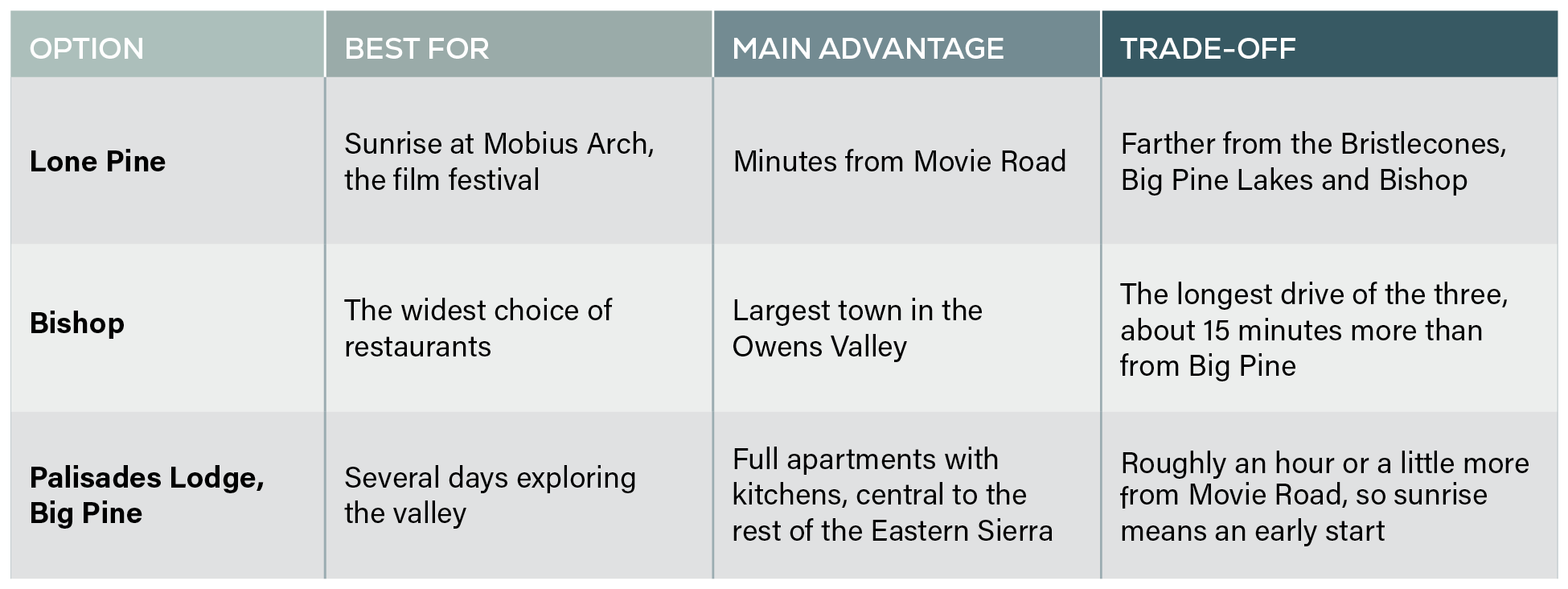
Lone Pine is the right call if sunrise at Mobius Arch is the reason you came. You are a few minutes from Movie Road, and on film festival weekend you are in the middle of it.
Bishop has the widest choice of restaurants and plenty of lodging. It also puts the Alabama Hills farthest away.
Big Pine works best when the Alabama Hills are one day of several. The Ancient Bristlecone Pine Forest, the Big Pine Lakes trailhead and the Owens Valley Radio Observatory are all a short drive from town, Manzanar sits between Big Pine and Lone Pine, and Bishop is 15 minutes north. For that kind of trip, we recommend Palisades Lodge of Big Pine. Every stay is a full apartment with a kitchen, so you can pack a cooler for the drive south and cook a real dinner when you get back, and weekly and monthly rates are available for longer trips.
AT A GLANCE
Location: west of Lone Pine, off Whitney Portal Road
From Big Pine: about 47 miles, roughly an hour to an hour and a quarter, south on Highway 395
Roads: Movie Road is graded dirt that a regular car usually handles in dry weather
Best light: sunrise, when the Sierra crest turns pink
Time needed: two to three hours, or a full day with Manzanar and the film museum
Facilities: portable toilets at the Mobius Arch lot and across from Shark Fin. Bring all your drinking water
Managed by: Bureau of Land Management, Bishop Field Office
FAQ
-
Not usually. Movie Road is graded dirt and a regular passenger car can normally manage it in dry weather. Check conditions after heavy rain, and expect some side roads to need higher clearance.
-
A little over half a mile on a nearly flat loop, usually about 30 minutes. The trailhead is roughly 1.5 miles up Movie Road from Whitney Portal Road.
-
Yes. Whitney sits farther back than Lone Pine Peak, which is closer and often looks bigger. Your exact position decides which peak lands in the arch.
-
Yes. Since October 1, 2024, camping outside developed campgrounds is limited to designated sites and requires a free Alabama Hills camping permit. The permit does not reserve a site.
-
About 47 miles to the Mobius Arch trailhead, roughly an hour to an hour and a quarter by car, south on Highway 395 through Lone Pine.
-
More than 400 productions since 1920, including Gunga Din, How the West Was Won, Tremors, Iron Man, Gladiator and Django Unchained.
-
Every October in Lone Pine. The 2026 festival runs October 8 to 11.
-
Yes. Manzanar is on Highway 395 about 9 miles north of Lone Pine, so it fits on the way. Plan on one and a half to two hours there and two to three hours in the hills.
