
Ancient Bristlecone Pine Forest: A Visitor’s Guide
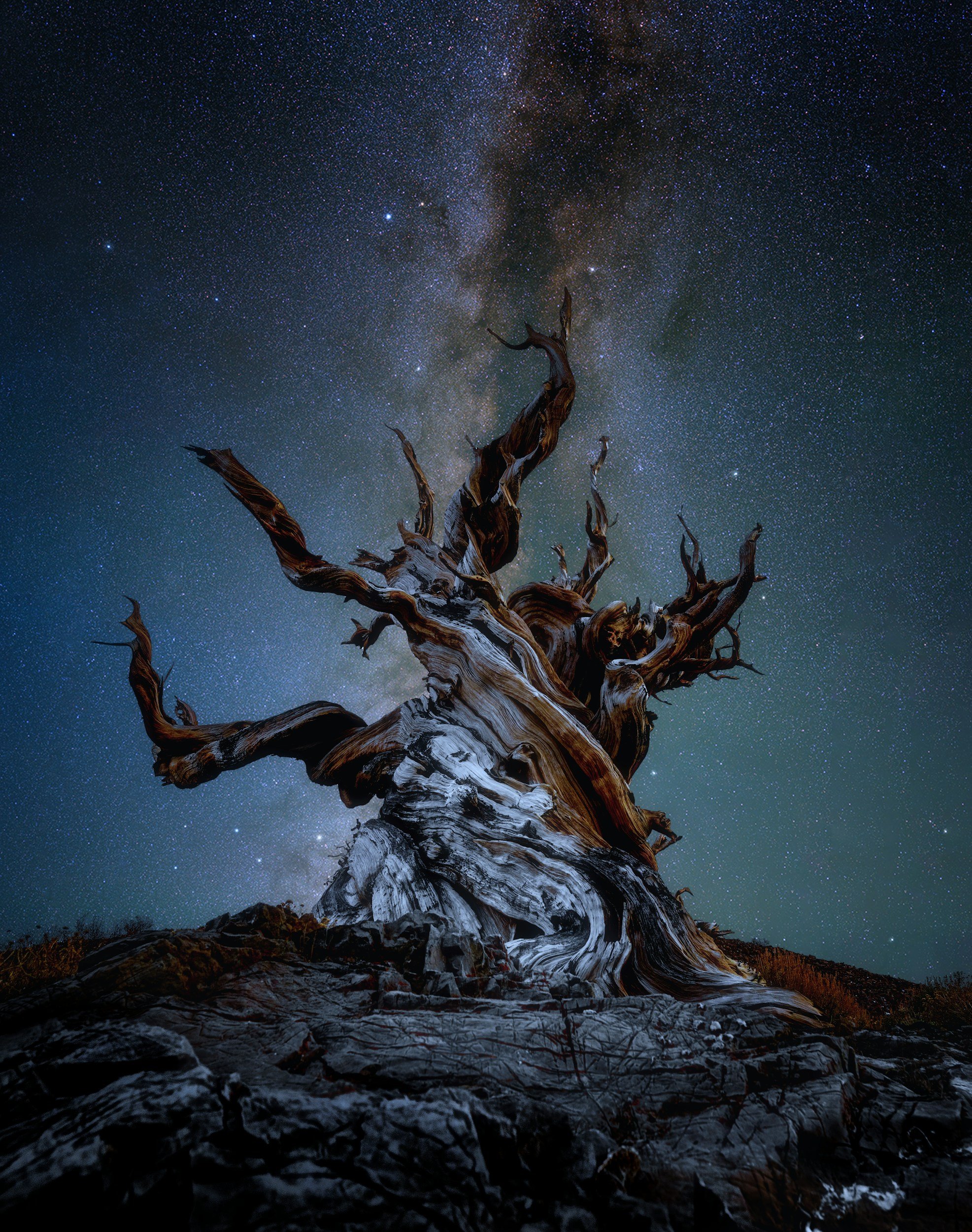
The Ancient Bristlecone Pine Forest sits high in the White Mountains east of Big Pine, California, home to Methuselah and other Great Basin bristlecone pines that have lived more than 4,800 years. The Schulman Grove visitor center is about 23 miles from town, a one-hour drive that climbs to roughly 10,000 feet.
These are among the oldest living things on earth. Methuselah was already centuries old before the Egyptian pyramids were built. This guide covers how to get there from Big Pine, which trails to walk, what the visit costs, when the road is open, and where to stay the night before.
How Do You Get to the Ancient Bristlecone Pine Forest?
The forest is about 23 miles east of Big Pine, a roughly hour-long drive. From Highway 395 just north of town, turn east onto Highway 168 and follow it for 13 miles. Turn left onto White Mountain Road and climb 10 miles to the Schulman Grove parking lot.
The road is paved all the way to Schulman Grove. It is steep and winding, gaining about 6,000 feet from the valley floor, so plan for a slow, scenic hour rather than a quick run up.
The pavement ends at Schulman Grove. The road to the higher Patriarch Grove is well-graded dirt and is usually fine for a normal car in dry conditions, but it adds another 12 miles of slow driving each way.
There are no services once you leave Big Pine. Fill your tank in town and bring water before you start the climb. Hi-Country Market on Main Street, across from Palisades Lodge, is the practical last stop for gas, water, ice, and snacks.
What Will You See: Methuselah, Pine Alpha, and the Patriarch Tree
The bristlecones here are Great Basin bristlecone pines, a species that grows only at high elevation in harsh, dry, windswept ground. The hard conditions are exactly why they live so long and take their twisted, sculpted shapes.
Methuselah is the most famous tree in the forest, dated at more than 4,800 years old. For decades it was considered the oldest known non-clonal living thing on earth. To protect it, the Forest Service keeps its exact location secret, and the tree is unmarked. It stands somewhere along the Methuselah Trail.
Pine Alpha is the first bristlecone that researcher Edmund Schulman dated at over 4,000 years. Unlike Methuselah, it is identified, and you pass it on the short Discovery Trail.
The Patriarch Tree, in the higher Patriarch Grove, is the largest known bristlecone pine in the world. It is a different kind of impressive than the oldest trees: wide and many-trunked rather than ancient and gnarled.
Which Trails Should You Walk at Schulman Grove?
Both main trails start at the Schulman Grove visitor center at about 9,850 feet. They are loops, so you return to your car either way.
Discovery Trail. A 1-mile loop with about 270 feet of climbing, usually half an hour to an hour. It is the easy option, with interpretive signs and a pass by Pine Alpha. If you have limited time or limited lungs at altitude, this is the one.
Methuselah Trail. A loop of about 4.5 miles with roughly 750 feet of climbing, usually two to two and a half hours. It winds through the Methuselah Grove, where the oldest trees stand, and opens to long views east toward Nevada. This is the better walk if you have the time and the legs for it at 10,000 feet.
Bristlecone Cabin Trail. A longer loop of about 3.5 miles that visits old mine and cabin sites and connects to the Methuselah Trail, for visitors who want more distance.
Should You Drive Up to Patriarch Grove?
Patriarch Grove is worth the extra time if the weather is clear and you are comfortable on a dirt road. It sits about 12 miles north of the visitor center at roughly 11,000 feet, higher and more exposed than Schulman Grove.
The grove has two short interpretive loops, each under a mile, and it is home to the Patriarch Tree. The setting is stark and open, closer to alpine tundra than forest.
Skip it if the road is wet, if afternoon storms are building, or if the altitude is already wearing on your group. Schulman Grove alone is a full and rewarding visit.
What Do You Need to Know Before You Go?
A few things make the difference between an easy visit and a rough one at this elevation.
Altitude is the main factor. You will be walking at and above 10,000 feet. Expect to move more slowly than you would at sea level, drink more water than feels necessary, and watch for headaches or nausea in anyone not used to the altitude.
There is no water at the groves. Bring all the water you need. The visitor center sells bottled water when it is open, but do not count on it.
The sun is strong, and the air is thin. Even when the air feels cool, the high-elevation sun burns fast. Wear sunscreen, a hat, and sunglasses.
Big Pine is your last real stop. Past town, there is no gas, food, or cell signal. Fuel up, pick up food and water, and download your maps before you leave Big Pine.
Dress for a 30-degree swing. It can be warm in the sun and cold in the wind on the same afternoon. Bring a layer even in summer.
When Is the Best Time to Visit?
The forest is open roughly from mid-May through October or early November, weather permitting. White Mountain Road closes and goes unmaintained once snow arrives, and it does not reopen until the snow clears in late spring.
Summer, June through September, is the reliable window. The road is open, the visitor center is staffed with interpretive programs, and access to both groves is straightforward. Mornings are calmer and cooler than afternoons at altitude.
Early fall, late September into October, is quieter and often clearer, with crisp air and fewer visitors, though the visitor center may be on reduced hours and the first storms can close the road early.
Avoid planning a winter trip. From about November through May the road is closed, and there is no vehicle access to the trees.
What Does It Cost to Visit?
The day-use fee is $3 per person, with a maximum of $6 per car. Children under 18 are free.
The America the Beautiful interagency pass is accepted in place of the fee. The groves are day-use only, open from 6 a.m. to 10 p.m. The Schulman Grove visitor center is open in summer only and closed from roughly October through April.
Where Should You Stay Near the Bristlecone Pines?
There is nowhere to sleep inside the forest, so visitors have three practical options below it.
Camp at Grandview. Grandview Campground is the closest option, about 5 miles below Schulman Grove on the way up. It has 23 first-come sites with a $ 10-per-night maintenance donation, no water, and high-elevation nights. It suits self-sufficient campers who want to wake up close to the trees.
Stay in Big Pine. Palisades Lodge of Big Pine is about 23 miles below the grove, roughly an hour by car, at around 4,000 feet. This is the acclimation play that experienced visitors use. The forest is high enough that the altitude catches people off guard, and sleeping low in town before driving up makes the day easier. The lodge offers full apartments with kitchens, so you can cook a real breakfast before the climb and a hot dinner when you get back down. Weekly and monthly rates are available for longer Eastern Sierra trips.
Stay in Bishop. Bishop is about 15 miles north of Big Pine, with more dining and services. The trade-off is a longer drive to the trailhead and one less reason to be in the quiet end of the valley.
Plan Your Visit from Big Pine
The bristlecones sit above 9,800 feet, and the people who enjoy the visit most are the ones who arrive rested and acclimated rather than altitude-shocked off a long highway day. Sleep low in Big Pine, fuel up and fill your water at Hi-Country Market across the street, and drive up in the morning ready for the climb.
Palisades Lodge of Big Pine is the closest full-apartment lodging to the forest. Book direct for the best rate.
Frequently Asked Questions
-
Methuselah, in the Ancient Bristlecone Pine Forest, is more than 4,800 years old. It germinated around 2833 BCE, before the Egyptian pyramids were built, and was long considered the oldest known non-clonal living organism on Earth.
-
It is high in the White Mountains of Inyo County, east of Big Pine, California, reached by Highway 168 and White Mountain Road. The Schulman Grove visitor center sits at about 9,850 feet.
-
The Schulman Grove is about 23 miles east of Big Pine, a roughly 1-hour drive with about 6,000 feet of elevation gain on a paved mountain road.
-
You can walk the Methuselah Trail, where the tree stands, but Methuselah is unmarked, and its exact location is kept secret to protect it from vandalism.
-
Yes. The day-use fee is $3 per person, up to $6 per car, and children under 18 are free. The America the Beautiful interagency pass is accepted.
-
The forest and White Mountain Road are open roughly from mid-May through October or early November, weather permitting. The road closes for winter once snow arrives.
-
The bristlecones grow between about 9,800 and 11,000 feet. The Schulman Grove visitor center is near 9,850 feet, and Patriarch Grove is around 11,000 feet.
AT A GLANCE
Location: White Mountains, east of Big Pine via Highway 168
Distance from Big Pine: 23 miles (about 1 hour)
Elevation: Schulman Grove ~9,850 feet, Patriarch Grove ~11,000 feet
Fee: $3 per person, $6 per car maximum, under 18 free
Season: Mid-May through October or November, weather permitting
Trails: Discovery Trail (1 mile), Methuselah Trail (about 4.5 miles)
Services: None past Big Pine. Bring all your water.
